Your First Northern Lights Trip: Choose One Base and Several Nights
A Northern Lights holiday should be a trip you would still value if the sky stays cloudy. The aurora is a natural phenomenon, and a booking cannot guarantee a visible display. Begin by choosing one practical base and enough time to make several evening attempts without sacrificing every day to exhaustion. The planning examples here are illustrative, not a weather forecast, probability calculation or tested tour recommendation.
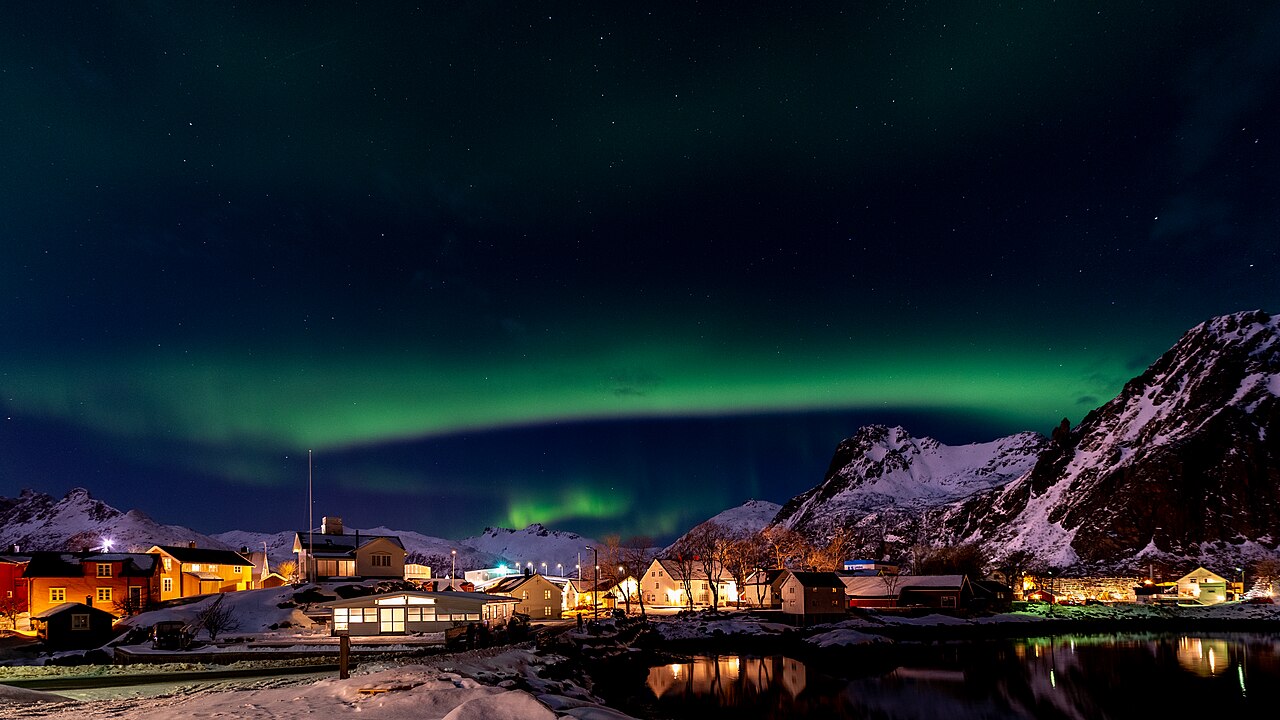
Photo: Christoph Strässler · CC BY-SA 2.0. Reference photograph: Aurora Borealis (Northern Light) over Svolvær, Lofoten, Norway2.jpg. It does not establish current access, weather, operations or a future event. Display may crop the original.
_over_Svolv%C3%A6r,_Lofoten,_Norway2.jpg)
Choose the whole holiday, not just the sky
List the daytime experiences you actually want: museums, local food, an operator-led winter activity or time in a town. Compare destinations on those interests before looking at dramatic aurora photographs. A place with attractive scenery but difficult transfers may not suit a short first trip. Ask whether the holiday still feels worthwhile without a sighting. That question is more useful than comparing unverified claims that one hotel has a better success rate than another.
Select one base with manageable access
Compare the international route, regional arrival point and final transfer to the lodging. A destination described as near an airport can still require a prearranged road journey. Check current services on your dates and the provider's late-arrival process. For a short stay, one base generally reduces packing and exposure to transport disruption. Do not add a cross-border journey merely to collect more aurora destinations; moving does not guarantee escaping cloud or improving the display.
Understand what an evening attempt needs
Visible aurora requires a suitable dark sky and favorable local viewing conditions, as well as auroral activity. Cloud can hide a display, and light pollution can make faint activity harder to see. An activity index is not a promise that a particular hotel window will show colored curtains. Use the local meteorological service and responsible operator guidance close to the time. Avoid planning a distant drive around a forecast that may change before you arrive.
Give the calendar room for rest
An illustrative four- or five-night stay allows more than one evening opportunity, but no fixed length guarantees success. Keep mornings after late outings light. Plan one substantial daytime activity and avoid booking a pre-dawn departure after a potentially very late tour. Label optional evenings so the group can choose rest when needed. More nights only help when the travelers remain comfortable enough to use them sensibly.
Compare guided and local viewing options
A responsible guided outing can provide transport, local knowledge and a managed outdoor setting. A verified nearby viewing area may allow a shorter attempt without a long journey. Neither controls the sky. Ask about access, walking, heated shelter, toilet arrangements and the return process. Do not wander onto unfamiliar frozen water or into remote terrain because an open-looking area appears dark on a map. Use permitted, suitable places and current local advice.
Make warmth a booking requirement
Waiting differs from walking: clothing that felt comfortable in town can be inadequate when standing still. Ask exactly which outerwear and boots a tour provides, in what sizes and whether you need your own base layers. Confirm the time and distance outdoors and access to warmth. Avoid buying a photographic dream whose physical requirements do not fit the group. Cold tolerance is individual, and a shorter comfortable attempt can be a better choice than an endurance contest.
Read the cancellation language literally
Distinguish a canceled tour from a tour that operates without a sighting. Ask what a repeat attempt includes, whether it depends on space and whether it fits your remaining stay. A marketing guarantee may refer to rebooking rather than a cash refund or a visible aurora. Keep written terms beside the reservation. Do not assume weather-related cancellation of one activity automatically covers accommodation, flights or another independent booking.
Prepare an honest record of the experience
Enjoy time looking with your eyes before troubleshooting cameras. Photographs can show colors and brightness differently from visual perception, so avoid using an edited image as a promise of what every traveler sees. Keep a simple log of date, location, conditions and what was actually visible. If there is no sighting, record that plainly. A professionally planned trip can still have an unsuccessful aurora night; honesty is part of useful travel information.
Your working checklist
Checkmarks stay in this browser when storage is available. They do not submit information or complete a purchase.
Put it into practice
- Choose the destination for daytime interests as well as the sky.
- Verify the regional arrival and final transfer.
- Allow several nights if feasible without treating them as a guarantee.
- Compare guided and suitable local viewing arrangements.
- Confirm clothing, outdoor duration and warm shelter.
- Read cancellation and no-sighting terms before paying.
- Keep the next mornings flexible and retain a daytime backup.
Before you finish
- No sighting is promised.
- Remote or frozen-water access is not improvised.
- Every traveler can tolerate the chosen outing.
- The trip remains worthwhile without aurora.
Common questions
How many nights guarantee the Northern Lights?
No number can guarantee a visible display. Additional nights can create more opportunities, but cloud, activity and access still matter. Choose a stay length that also supports a holiday you want during the day.
Is a guided tour necessary?
Not always. It can solve transport and outdoor logistics, while a suitable local area may work for some travelers. Compare the real setting, access and comfort rather than assuming either approach controls the chances.
Will the sky look exactly like the photographs?
Not necessarily. Cameras, exposure and editing can represent color and brightness differently. Treat promotional photographs as examples of possible scenes, not a promise of visual intensity on your night.
Should I change countries if the forecast is cloudy?
Only after carefully assessing transport, weather, cost and the remaining trip. A long last-minute move can add risk without delivering clear sky. A flexible local plan is often more practical.