Abisko and Kiruna: Plan a Swedish Lapland Aurora Trip
Abisko and Kiruna can form a Swedish Lapland holiday, but the practical route should be checked before the photographs choose it for you. Rail, bus, airport transfers and specific evening activities have their own booking conditions. This guide is an original planning framework. It does not guarantee clear sky, claim a measured sighting rate or assume that every lift or excursion operates on every winter date.
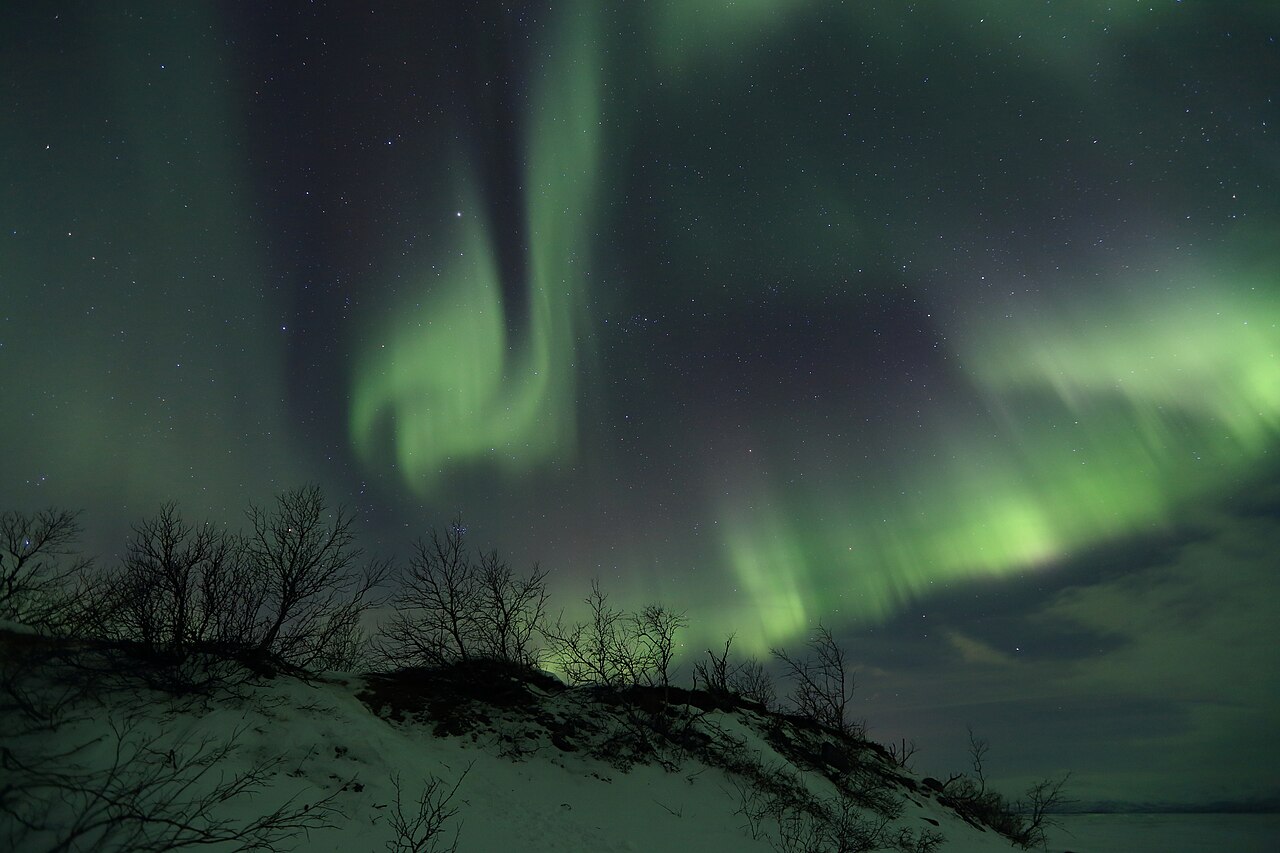
Photo: Pavel.shyshkouski · CC BY-SA 4.0. Reference photograph: Aurora in Abisko near Torneträsk.jpg. It does not establish current access, weather, operations or a future event. Display may crop the original.

Decide whether to use one base or two
Choose the daytime experiences first and compare a Kiruna stay, an Abisko stay or a deliberate split. A very short holiday may lose too much time to another hotel change. If splitting, give each base enough nights to serve a clear purpose and protect the transfer day. Write the actual lodging address; a place described as near Abisko can still require a separate journey from the station or evening meeting point.
Check the entire arrival chain
Search the current flight or train arrival and the final service to your lodging on the intended date. The Swedish Tourist Association's Abisko FAQ provides practical starting information, but verify the operator's live timetable and booking. Ask what happens after a late arrival and how luggage is handled. Do not assume an airport transfer automatically connects with every flight or that a taxi will be immediately available without arrangement.
Book the activity rather than the destination name
If a particular Abisko evening experience is central to the trip, check its own calendar, capacity, access requirements and weather process. A general destination stay does not include admission to every activity nearby. Ask what clothing is provided and what you must bring. Confirm the meeting point and return arrangements. A ticket to an elevated or exposed setting buys the stated activity under its conditions, not a guaranteed aurora display.
Use official lodging information precisely
Ask about room category, meals, reception hours and bag storage. If staying at a visitor facility, check which services are open during the actual stay rather than inferring them from a year-round accommodation statement. A small food shop and a full restaurant are different provisions. Confirm the dinner arrangement before a late outing. Keep the property contact offline in case the arrival service changes.
Choose daylight activities within your ability
Use managed visitor activities and current local guidance. Avoid treating a summer trail description as a winter walking plan or wandering into unfamiliar terrain for a view. Ask about surfaces, duration and clothing. If the group includes inexperienced winter travelers, a suitable guided activity can be more useful than an ambitious independent route. Keep an indoor or lower-effort alternative for weather changes and recovery after a late night.
Plan aurora attempts with shelter and boundaries
Whether viewing through an organized activity or a suitable local arrangement, identify where the group will stand, how it returns and where warming is possible. Stay within permitted areas and follow staff instructions. Do not approach unfamiliar frozen water or follow tracks away from the managed setting. Faint or brief aurora can be easy to miss, but staying outside indefinitely is not a sensible response to an uncertain display.
Give Kiruna its own purpose
If Kiruna is included, research the specific cultural, architectural or operator-led interests that justify its nights. Confirm current locations and access through official local and venue sources. Do not use the town only as an unplanned waiting room between transfers. Keep its activity schedule compatible with the next journey, and avoid a late event immediately before an early departure. The route should have worthwhile days in both places if both are retained.
Allow a conservative return to the hub
Check the final transfer with enough margin for winter disruption, and consider the consequences of separate bookings. Keep a preceding-night hub stay as a comparison where a missed flight would be costly. Read cancellation terms and insurance conditions before assuming coverage. A comfortable Swedish Lapland trip can include no visible aurora; transport, food and meaningful daytime choices remain the parts you can plan well.
Your working checklist
Checkmarks stay in this browser when storage is available. They do not submit information or complete a purchase.
Put it into practice
- Choose the activities that justify Abisko and any Kiruna nights.
- Compare one base with a deliberate split.
- Verify the full arrival chain on the actual date.
- Reserve any essential evening activity and read its weather conditions.
- Confirm lodging meals, reception and clothing provisions.
- Use appropriate managed daytime options and keep recovery time.
- Protect the return to the departure hub.
Before you finish
- A destination booking is not mistaken for activity admission.
- Year-round lodging does not imply every service is open.
- Transport connections are verified on the intended date.
- No clear-sky guarantee is implied.
Common questions
Does Abisko guarantee a clear sky?
No. A location's reputation does not remove weather variability. Plan worthwhile daytime experiences and several suitable opportunities where feasible, while accepting that a visible display may not occur.
Can I book an evening activity after arriving?
Check current capacity and the importance of that activity to the trip. If it is essential and places are limited, advance booking may be sensible. Read the conditions and verify your arrival can support the meeting time.
Should I stay in both Kiruna and Abisko?
Only if the nights and intended experiences justify the additional move. A short trip may work better from one base. Compare the full transfer, not just the map distance.
Can I use summer walking routes in winter?
Do not assume so. Conditions, daylight and hazards differ. Use current local advice and suitable managed activities rather than adapting a summer description without the relevant experience.