A Short Iceland Winter Trip With Space for Aurora and Weather
A short winter Iceland trip should not automatically imitate a fast summer circuit. Darkness, weather and changing road conditions can make a modest regional plan more useful than a long list of sights. This guide focuses on a city base plus a carefully chosen short outing or second base. It does not prescribe winter driving into unfamiliar terrain, publish a future road forecast or guarantee Northern Lights along a route.
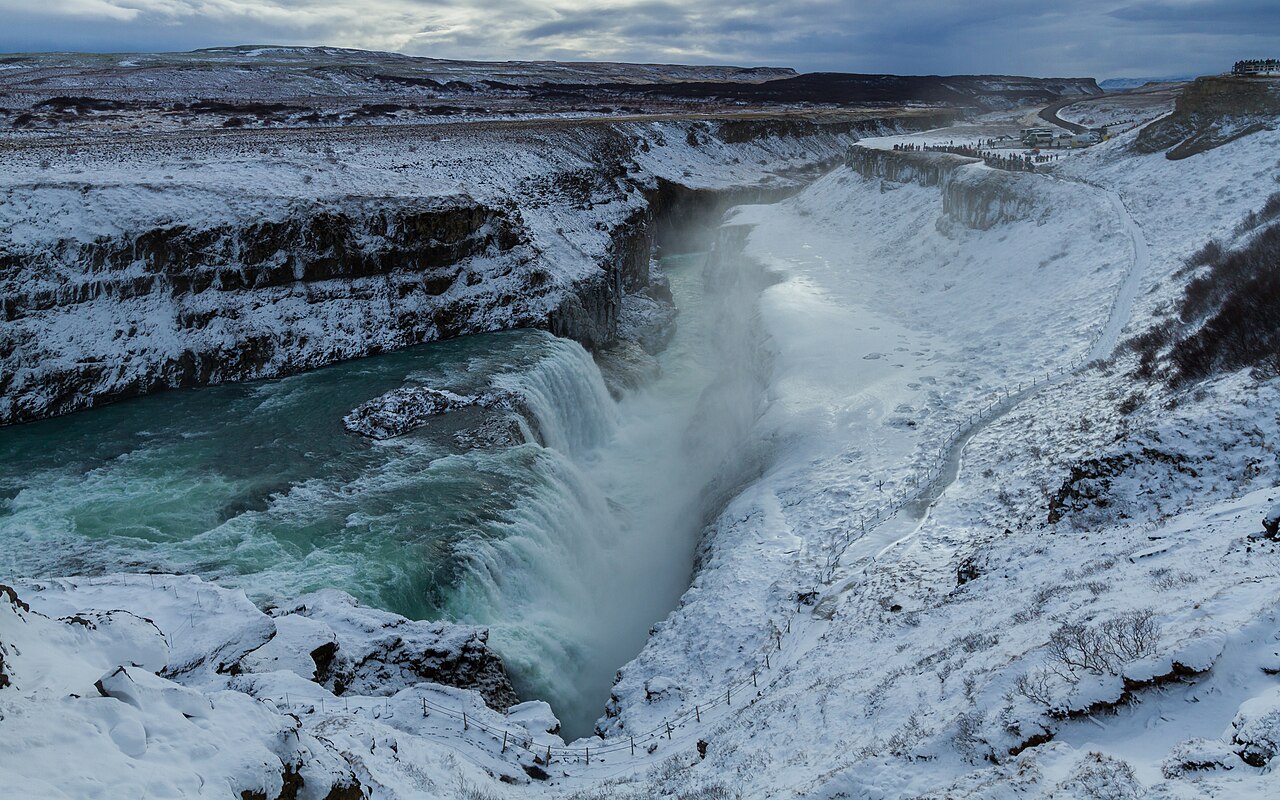
Photo: Pierre-Selim Huard · CC BY 4.0. Reference photograph: Iceland - 2017-02-22 - Gullfoss - 3684.jpg. It does not establish current access, weather, operations or a future event. Display may crop the original.

Choose a small geographic scope
Begin with the arrival and departure airport and the number of full days available. Compare staying in Reykjavik with adding one nearby region through an appropriate operator or a deliberate second base. Count the hotel move and return to the airport as travel periods. If the route only works when every road journey is at its summer map estimate, reduce it. The point is to spend usable time in places rather than complete a circuit.
Check driving suitability before renting
Discuss experience with the relevant winter conditions and the ability to change plans when warnings or closures occur. A vehicle type does not remove the need for judgment. Use Safetravel and the official road-information service for current conditions, and follow restrictions. If independent driving is not appropriate, compare organized day excursions or transfers. Do not let a prepaid lodging reservation become a reason to continue into unsuitable conditions.
Separate accessible visits from specialist activities
A roadside visitor attraction, a glacier activity and a remote hike are different undertakings. Choose current managed activities with requirements that fit the traveler. Verify the operator's meeting point, clothing, duration and cancellation process. Do not adapt an online summer walking description into a winter route. If an attraction requires a long approach, include that in the day's available light and energy rather than treating the map pin as the experience itself.
Build one flexible travel day
Keep the day of a regional move free from several paid attractions. Choose a small number of stops that can be omitted without breaking the route. Confirm the second property's reception and late-arrival process before setting out. Carry the information needed to contact it if conditions change. A flexible day is not empty planning; it is a deliberate way to prevent one delay from creating a series of failures.
Keep aurora viewing close to a managed plan
Ask the property or responsible operator about suitable permitted viewing areas and the route back to warmth. Use official weather and aurora information for context. Do not stop on an unsuitable road shoulder, enter a closed route or approach an unfamiliar shore because the sky changes. Safetravel's Northern Lights advice is particularly relevant when a photograph tempts a traveler to stop suddenly. The view can wait; road and site rules still apply.
Use indoor culture as part of the route
Research a museum, exhibition or town-based interest that can replace an outdoor period. Check its actual winter hours and location. Keep food access realistic if the second base is outside the city, including what happens after an early restaurant closure. A comfortable lodging with meals available can make a weather-bound day more pleasant. Avoid choosing a remote property solely for its exterior photograph if its ordinary facilities do not suit the group.
Protect the final return
Compare returning to the airport region the preceding day with a long separate same-day drive or transfer. Include the carrier's arrival requirement and current weather context. A final buffer night can cost money but reduce the consequences of disruption. Read insurance and booking terms without assuming all weather changes are reimbursable. Keep the final evening simple enough to pack, eat and rest before departure.
Reassess the plan each morning
Check official alerts, road status and the operator's update before choosing the day's route. Treat a closure or changed service as a reason to adapt, not a challenge to outsmart. Tell the accommodation or provider when the plan changes and follow the relevant cancellation process. A successful short winter holiday is one that stays within the travelers' ability and conditions, even if some scenery and every aurora attempt remain unseen.
Your working checklist
Checkmarks stay in this browser when storage is available. They do not submit information or complete a purchase.
Put it into practice
- Count full days and choose a modest region.
- Assess independent-driving suitability before selecting transport.
- Verify current managed activities and access requirements.
- Leave regional transfer day lightly committed.
- Arrange suitable viewing without roadside improvisation.
- Keep indoor and meal alternatives available.
- Return toward the departure hub with a conservative margin.
Before you finish
- Summer map times are not treated as winter guarantees.
- Road restrictions take precedence over prepaid plans.
- Specialist activities use appropriate operators.
- The final flight does not depend on a distant last-minute return.
Common questions
Should I drive the full Ring Road on a short winter trip?
Do not choose that scope merely because it is a popular summer route. Compare full days, experience, daylight and current conditions. A smaller region can provide a better trip with less transport pressure.
Does a four-wheel-drive vehicle make every road suitable?
No. Vehicle capability does not override closures, warnings or the driver's experience. Use current official information and be willing to change the route or transport arrangement.
Can I stop anywhere to photograph aurora?
No. Follow road rules, permitted parking and local access restrictions. A sudden display does not make a shoulder, closed road or unfamiliar terrain an appropriate viewing site.
What if weather prevents reaching the second hotel?
Prioritize current official guidance and contact the property and transport provider promptly. Follow the relevant booking and insurance procedures. Do not assume a reservation makes continuing the journey appropriate.